

Know the bird before the moment
Ontario grouse identification begins with a clear view and a few features checked together. A brown bird in woodland is not enough. Ruffed grouse, spruce grouse and sharp-tailed grouse have different shapes and markings, while American woodcock have a very different bill and body. Use the real photographs below to compare those features before your trip. Study a whole bird, then look at the head, chest and tail. In the field, an uncertain bird is a chance to watch and learn. Leave it alone rather than trying to settle the question after the fact.
If someone at camp calls the bird partridge, start by comparing the ruffed grouse photos. The nickname is common in Northern Ontario, but it does not identify every grouse or the separate gray partridge.
Compare the photographs
These reference photographs show two ruffed grouse, male and female spruce grouse, a sharp-tailed grouse and an American woodcock. They are not all Ontario photographs; the male spruce grouse was photographed in Algonquin Provincial Park, while the female was photographed in Quebec. Each image keeps its source credit. Select a photograph to open a larger view. Plumage, season, light and the angle of the bird can change the features visible to you. A photograph is a useful starting point, not a guarantee that every live bird will look just like it.
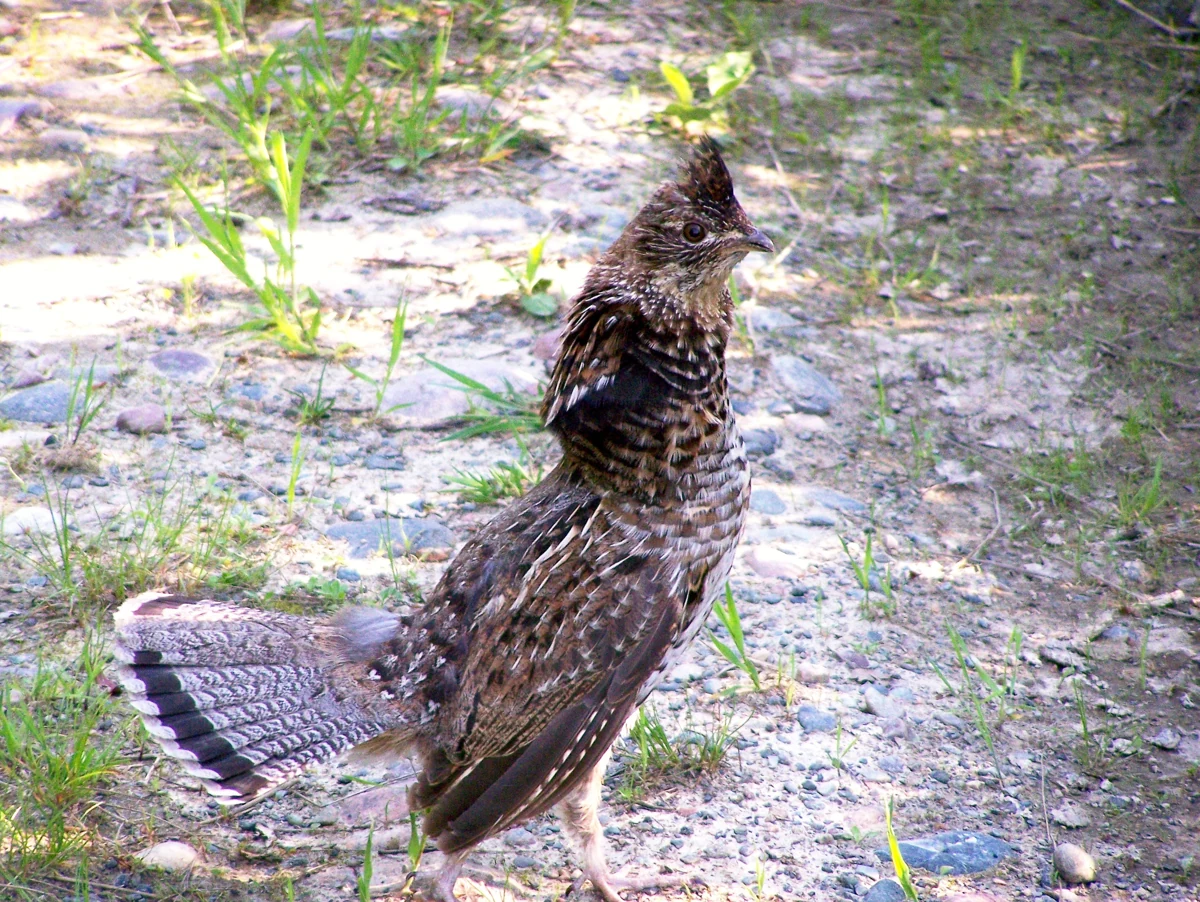
Grey colour morph. Sex is not confirmed.
Photo: 72426950scott · Source photo · Public domain
Resized and converted to WEBP.
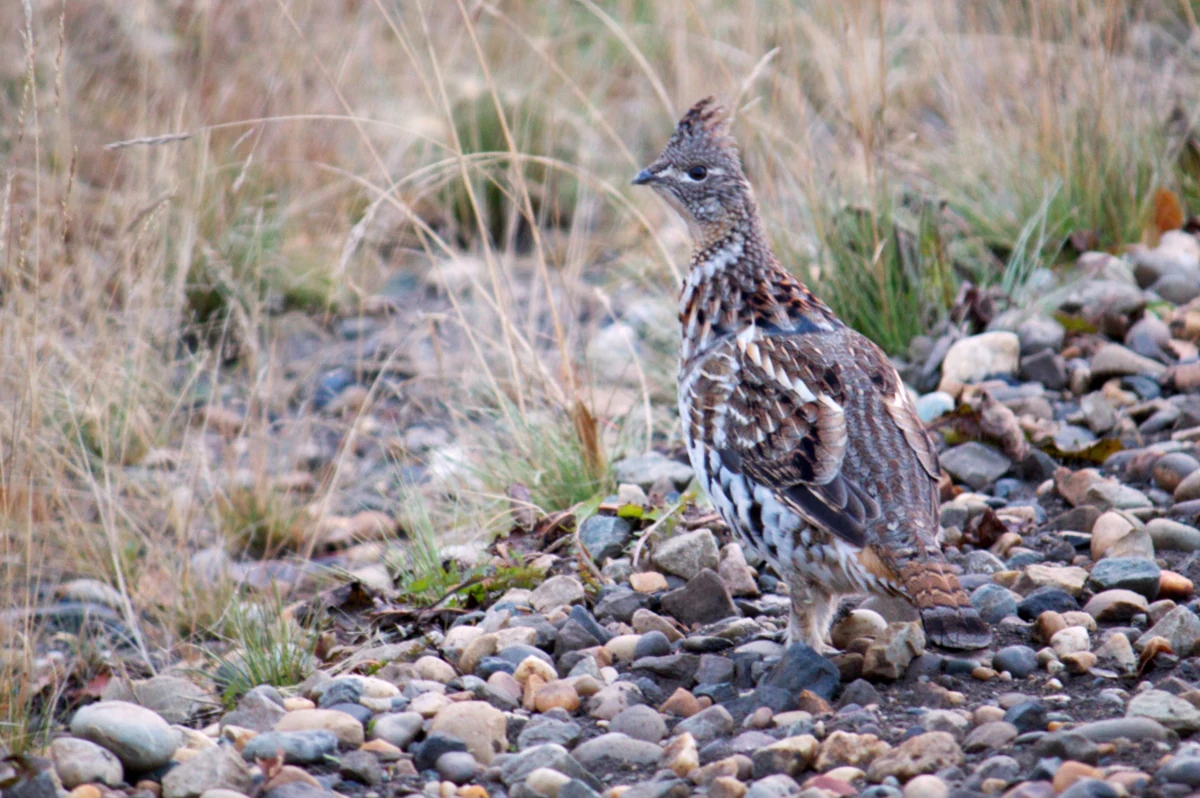
A second view of ruffed grouse. Sex and colour morph are not confirmed.
Photo: Gerry (tuchodi) · Source photo · CC BY 2.0
Resized and converted to WEBP.
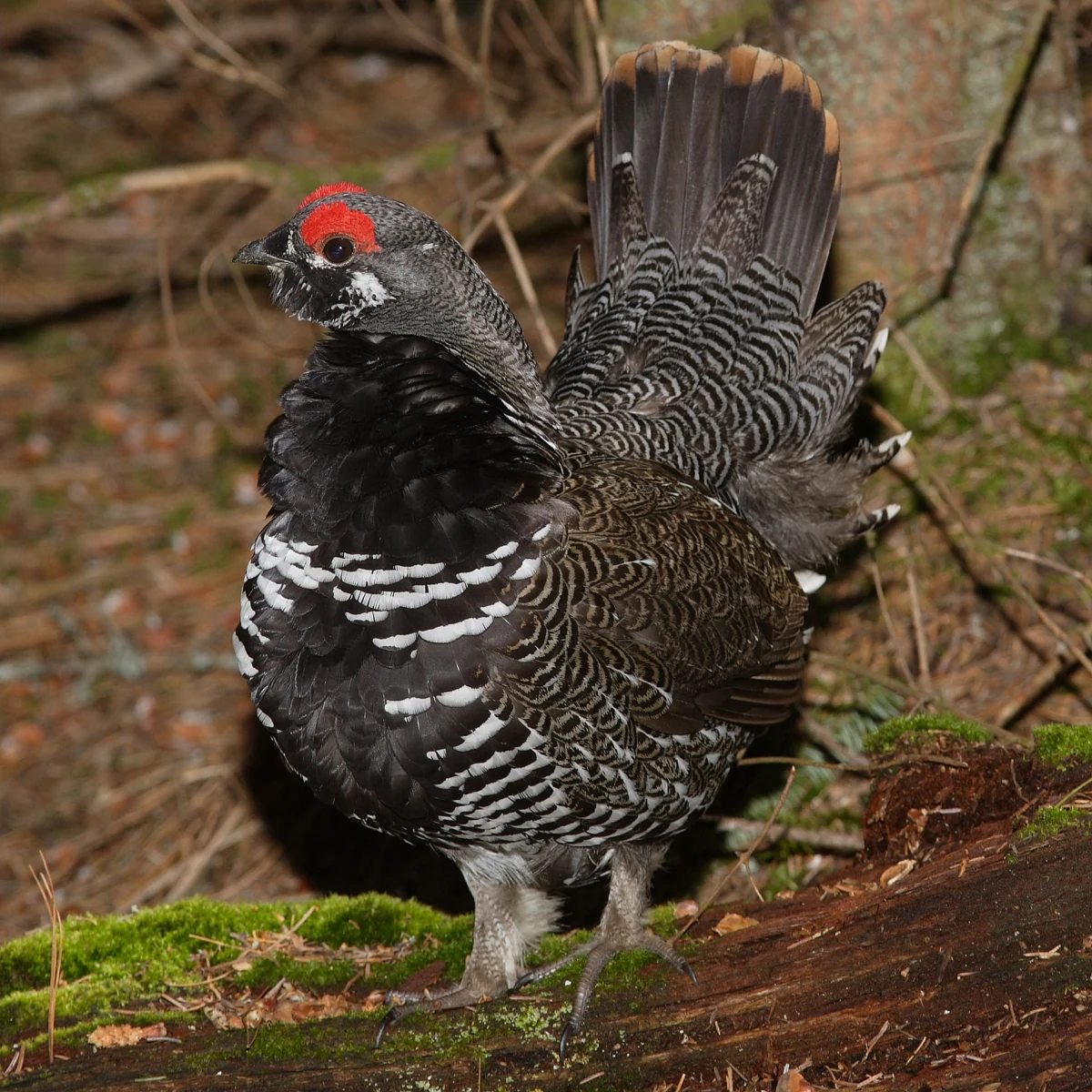
Male spruce grouse photographed in Algonquin Provincial Park, Ontario.
Photo: Mdf · Source photo · CC BY-SA 3.0
Resized and converted to WEBP.
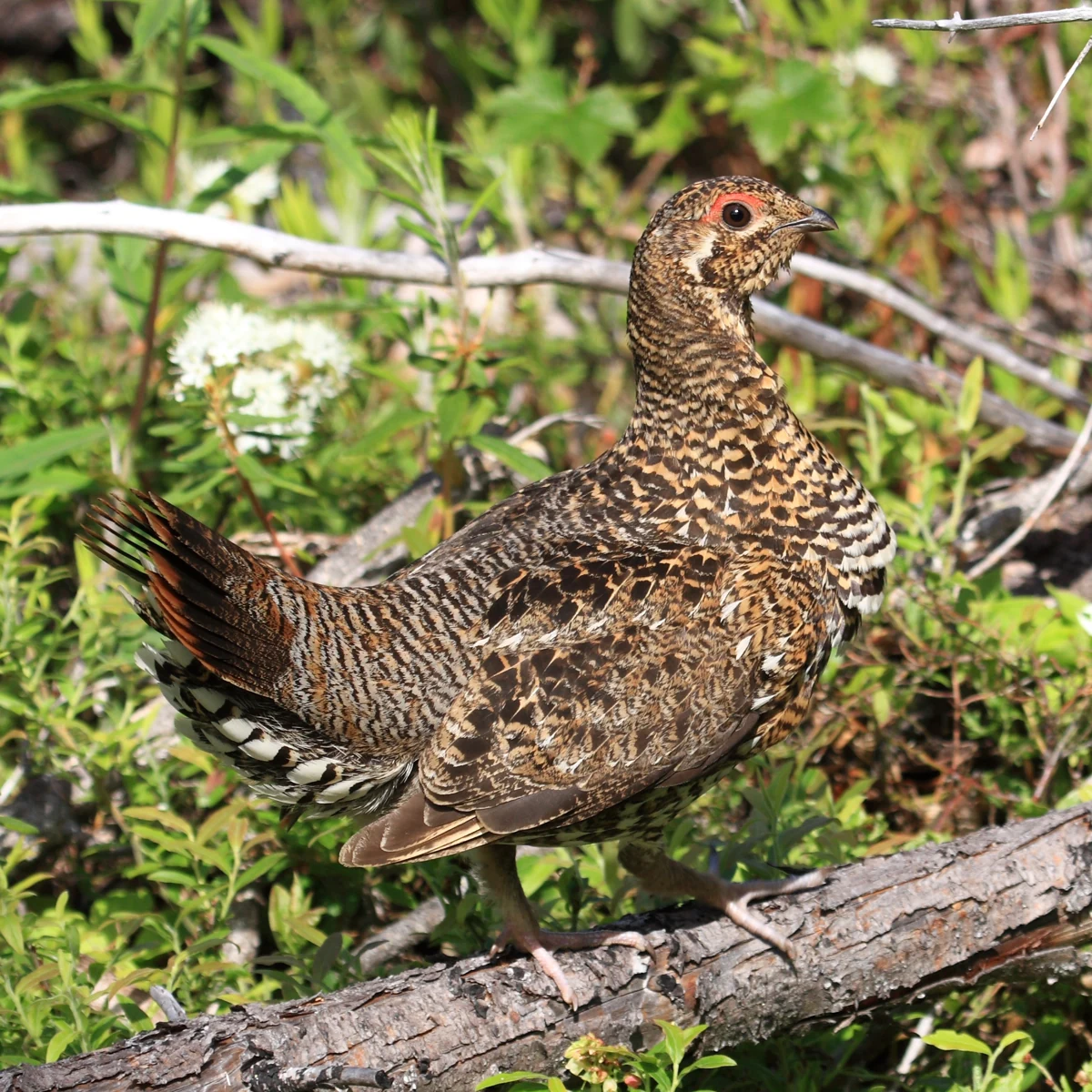
Female spruce grouse photographed in Quebec.
Photo: Cephas · Source photo · CC BY-SA 3.0
Resized and converted to WEBP.
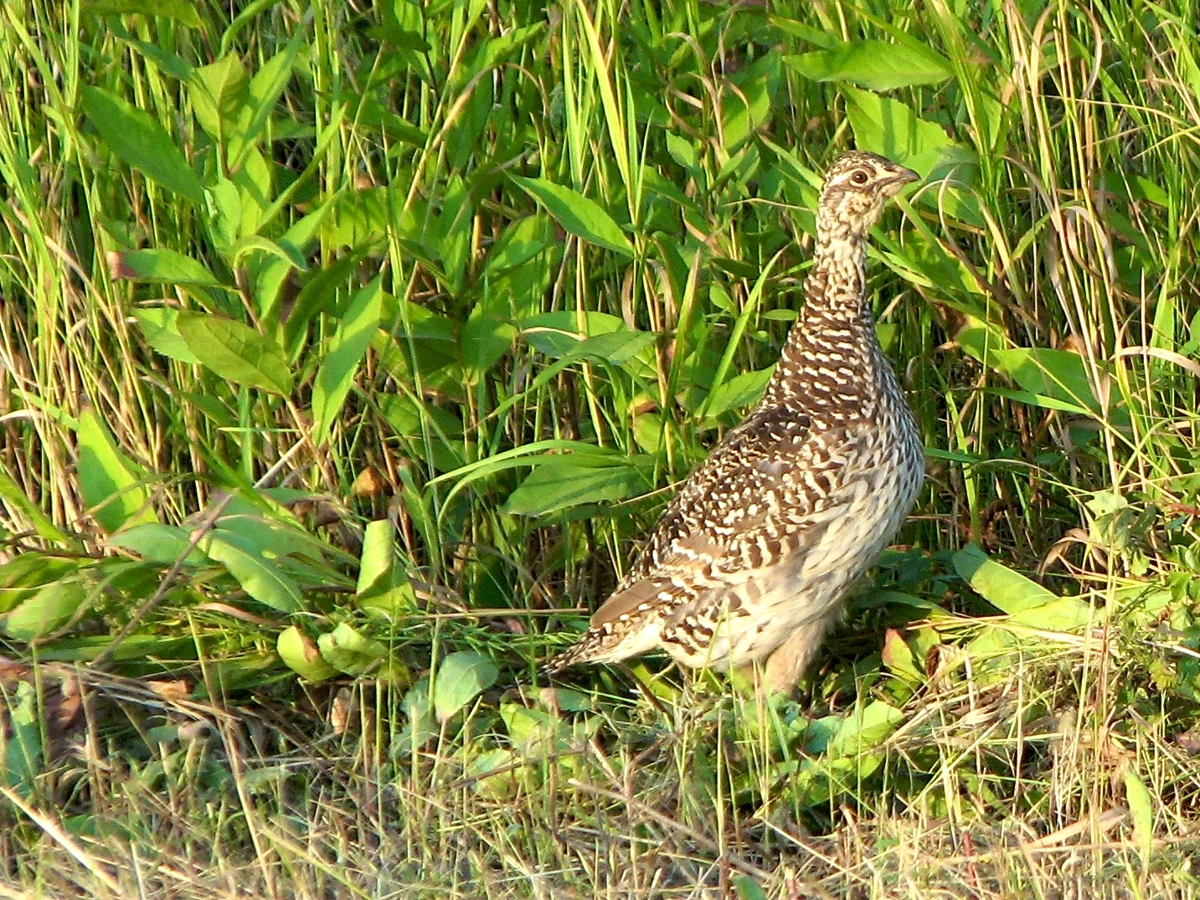
Compare the pointed tail and patterned body.
Photo: Gerry (tuchodi) · Source photo · CC BY-SA 2.0
Resized and converted to WEBP.
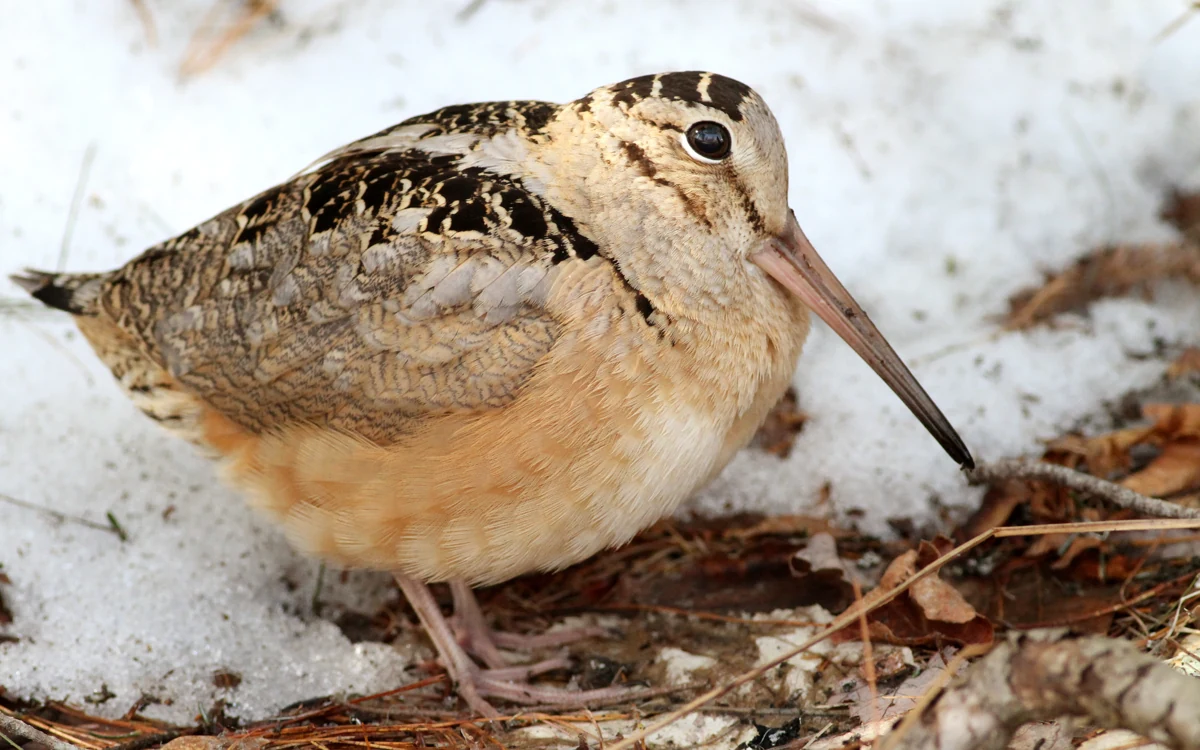
Compare the long bill and head shape.
Photo: Fyn Kynd · Source photo · CC BY 2.0
Resized and converted to WEBP.
Four birds, four sets of clues
| Bird | Useful clues | Keep in mind |
|---|---|---|
| Ruffed grouse | Small crest, neck ruffs and a broad fan-shaped tail with a dark band near its tip. | Grey and reddish colour morphs are the same species. |
| Spruce grouse | Male: red brow, dark chest and white markings. Female: barred, mottled plumage. | Study females as well as the more strongly marked males. |
| Sharp-tailed grouse | Pointed tail with longer central feathers; patterned breast and pale belly. | Use several field marks together. |
| American woodcock | Very long straight bill, large head, short legs and short tail. | Woodcock are migratory game birds with their own rules. |
The table gives a short set of clues to use with the photographs. The linked Cornell guides provide more views, including different sexes and ages. Look at them before leaving home, not only after a bird has surprised you. A good identification should explain the shape and markings you saw. Habitat and behaviour can support it, but neither should be the whole answer.
Ruffed grouse: crest, neck and tail
Look for a short pointed crest, patterned woodland plumage and a fairly long tail with a broad dark band near the tip. When a male displays, the dark neck feathers stand out as a ruff. A resting bird may keep those feathers flat. Ruffed grouse can be greyish, reddish-brown or between those colours. Our two reference photos should not be treated as a male-and-female pair: their sex is not confirmed in the source details. The grey-morph label belongs to the first photograph only.
Seeing several photographs of the same species is useful because it breaks the habit of expecting one exact shade. Try covering the photo caption and naming the features that led you to the bird. If all you can say is that it looks like the right colour, spend more time with the tail, head and feather pattern.
Spruce grouse: study both sexes
A male spruce grouse can show a dark chest, white markings below and a red eyebrow comb. The female looks very different, with mottled feathers and strong barring on the underparts. She does not have the male's striking dark-and-white appearance. This is why learning only the male is not enough for a northern trip. Compare the female photograph carefully with the ruffed grouse photographs, then use additional views in the linked identification guide.
Spruce grouse are closely associated with evergreen woods, yet habitat alone does not settle the species. Nor does a bird that sits still while you approach. A quiet bird may be relying on its feather pattern to avoid attention. Stop at a respectful distance and look at several features while keeping your footing and your companions' whereabouts in mind.
Sharp-tailed grouse: a pointed tail
Sharp-tailed grouse have a pointed tail with longer central feathers rather than the long broad tail that is so familiar on a displaying ruffed grouse. Pale underparts carry dark markings, and the bird often looks at home in more open cover. The reference photo shows the body and tail from the side. Compare that profile with the woodland birds rather than guessing from size. There is no useful rule that every bird in an open patch must be a sharp-tail. Always return to what you can actually see.
Woodcock: the long bill changes the picture
An American woodcock has a long, straight bill, a rounded body and short legs. Dark bands across the head are another useful feature. It is a woodland shorebird, not a small grouse. That distinction matters to both identification and trip paperwork. If woodcock belongs in your hunting plan, read the upland-birds page and check the separate provincial and federal requirements. Do not borrow a grouse rule just because the birds can use some of the same general cover.
Use a slow practice routine
Choose one photograph and describe the head, body, tail and bill without reading its name. Compare it with the next bird and list two differences. Repeat with the female spruce grouse, where colour can be less helpful than expected. Then practise on live birds during ordinary walks, giving them plenty of room. Note any feature that was hidden rather than filling it in from memory. Those short, honest observations make a better foundation than one hurried glimpse.
Identification and permission are separate checks
Knowing the species does not establish that it may be hunted in that place on that day. Check current seasons, licences, unit boundaries and land access separately. Keep the photo guide available before the trip, use the species pages to learn the biology and make time for the rules page. A sound Ontario upland plan needs all three. The woods offer enough surprises without bringing an avoidable guess into the day.
From the grouse notebook
A few facts worth knowing.
One species, different colours
Ruffed grouse can show grey or reddish-brown plumage. Colour alone is not enough for identification.
Stillness is a defence
Spruce grouse may remain motionless and rely on their feather pattern to avoid notice.
Eyes high on the head
A woodcock's eyes sit high and towards the back of its head while it probes the soil for food.
Read the sources: Connecticut wildlife agency: ruffed grouse biology ↗ · Newfoundland and Labrador: spruce grouse biology ↗ · Cornell Lab: American woodcock guide ↗
Useful sources & official links
- Cornell Lab: ruffed grouse identification ↗
- Cornell Lab: spruce grouse identification ↗
- Cornell Lab: sharp-tailed grouse identification ↗
- Cornell Lab: American woodcock identification ↗
- Ontario: small-game rules ↗
- Canada: Ontario migratory bird rules ↗
- Hinterland Who's Who: ruffed grouse ↗
- Northern Wilds: ruffed grouse and the northern partridge name ↗
Source check: October 11, 2026. Confirm current trip and rule details before travelling.





