

A Canadian grouse of the conifer woods
The spruce grouse, also called Canadian grouse, is a medium-sized bird of conifer woods in Ontario, much of Canada and the northern United States. It may remain still on the ground or a branch, relying on camouflage. That habit is not a dependable identification test. A camp offering partridge hunting may discuss several grouse species; ask which bird is meant.
A spruce grouse brings a different feel to an upland walk. Think of evergreen cover, quiet forest ground and a bird worth studying carefully. A route chosen for ruffed grouse can pass through conifer woods too, so learn both species before the trip. Give each bird a clear name in your notes and check the rules for the actual wildlife management unit.
Ontario range map
From the original field notes
Spruce grouse · Ontario
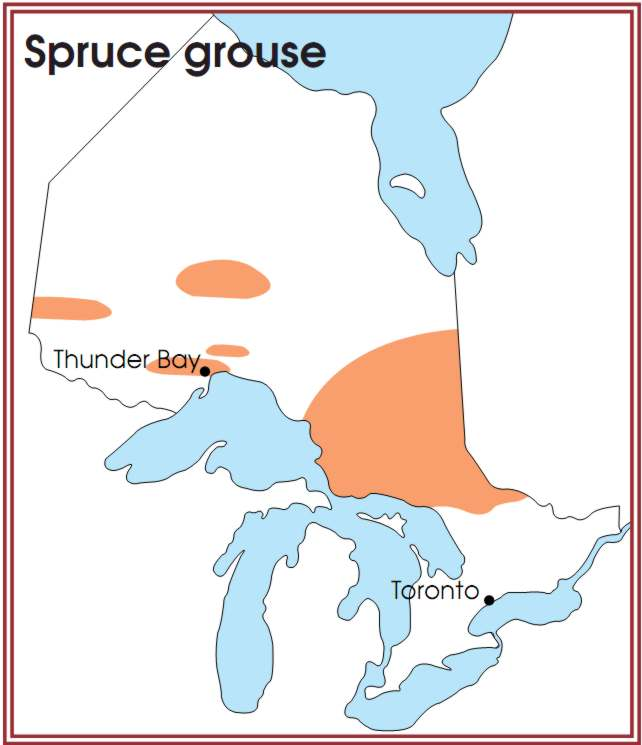
- Orange: areas shaded on the original map
- Blue: water
A reference map from our older website. It is not a current survey or a hunting-access map.
Open the full map ↗ · Cornell range map ↗ · Recent sightings ↗
Study the male and the female
Males show dark feathers below and greyer feathers above, with a red patch of skin over each eye. White markings on the chest and sides help break up the dark areas. Females have mottled grey or chestnut-brown feathers and strong barring. A female spruce grouse can be confused with a ruffed grouse when the view is brief or branches hide part of the bird.
Look at several field marks together: head shape, chest pattern, neck and tail. Study females as well as the more strongly marked males. Our photo guide includes both, with a separate ruffed grouse comparison. The drawing used around this site is a camp graphic of a ruffed grouse; use the real bird photographs and linked identification guides when learning spruce grouse.
A changing menu through the seasons
During winter, spruce grouse feed mainly on conifer needles. The summer months bring a wider menu of green plants, berries, insects and other ground foods. The change in diet is supported by seasonal changes in the bird's digestive system. Cornell describes a larger gizzard and longer intestines in winter. The crop stores food for later digestion.
Spruce, fir and jack pine are useful trees to recognise when reading northern cover. Birds may walk along branches as well as the forest floor, so take a patient look through the lower trees. Compare the evergreen stand with neighbouring mixed woods and note the growth near your feet. These are broad habitat clues, not a promise that every conifer patch holds a bird. For more about food and chick care, read the spruce grouse biology post in the camp journal.
Match the bird to the correct rules
Ontario does not have an open spruce grouse season in every wildlife management unit. Do your species check before you choose a route, and keep the current provincial rules available during the trip. A familiar date from a past visit is not enough. Nor is a general description such as northern Ontario when the destination crosses unit boundaries.
Our seasons and licences page links to the official tables and explains how to organise the checks. Use that page as a starting point, then confirm the details for the precise place you will hunt. If the bird or the legal setting is uncertain, leave the chance alone and carry on with the walk.
Build a small, clear route
Evergreen woods can make a short distance feel much longer. Repeated tree shapes and limited views may hide the direction you came from. Start with a route you can follow back with confidence, and mark the vehicle location before moving away. Keep a map and compass available even if you usually use a phone.
Break the day into separate walks with a check-in between them. This gives you a chance to change wet clothing, top up water and decide whether the next route still suits the weather. It also keeps your trip notes clear: one block of cover, one short record and one decision about what to try next.
Walk with room to see
Choose paths through cover that let you keep your footing and know where your companions are. A thick stand may look inviting from the edge but offer little room to walk safely. You do not need to force a line through the tightest growth. Work along a legal route that gives a useful view of the habitat and an easy way back.
If you stop to look at a bird, let the rest of the group know. A quiet hand signal may suit a close team, but a clear spoken message is better than confusion. Keep the day calm. Rushing to catch up after losing sight of a partner can spoil the whole outing.
Plan for wet branches and cold hands
Even a day without rain can leave clothing wet after a walk through low branches. Carry a dry pair of gloves, keep spare socks at the vehicle and protect your map and phone from water. Put a warm layer in the pack before you feel the need for it. Small comforts matter when the return walk begins late in the day.
Choose clothing that lets you move and see without fuss. A heavy layer may feel right at the vehicle and become too warm once you begin walking. A simple set of layers gives you more control. Use the gear guide and printable packing list to prepare the kit before the trip.
Choose the camp around the whole day
Ask a prospective camp about autumn operation, daily travel, nearby services and current access advice. If you bring a dog, ask about the dog policy before sending a deposit. If you plan to fish as well, confirm that those services are available during your dates. Treat each answer as a practical booking detail rather than proof of hunting success.
A spruce grouse trip works best when you enjoy the northern woods themselves. Give the bird time, keep the route manageable and learn something from each walk. A few careful notes and a dry place to return to can make a quiet day feel well spent.
From the grouse notebook
A few facts worth knowing.
A bird that eats needles
Spruce grouse eat many conifer needles, with buds and ground foods also used through the year.
A food pouch for later
A spruce grouse's crop can hold food weighing up to about ten percent of its body weight.
Stillness is a defence
Spruce grouse may remain motionless and rely on their feather pattern to avoid notice.
Read the sources: Newfoundland and Labrador: spruce grouse biology ↗ · Cornell Lab: spruce grouse guide ↗
Useful sources & official links
- Cornell Lab: spruce grouse identification ↗
- Cornell Lab: spruce grouse life history ↗
- Newfoundland and Labrador: spruce grouse biology ↗
- Ontario: small-game rules ↗
- Hinterland Who's Who: ruffed grouse ↗
- Northern Wilds: ruffed grouse and the northern partridge name ↗
Source check: October 11, 2026. Confirm current trip and rule details before travelling.





